When you hear “Japanese New Year,” what comes to mind?
Perhaps crowds of people in kimono visiting shrines for hatsumode (the first shrine visit of the year), street vendors selling lucky charms, and a festive, bustling atmosphere.
But here’s what many people don’t realize: most Japanese people actually spend New Year’s Day quietly at home.
They embrace a peaceful time surrounded by centuries-old traditions, far removed from tourist destinations.
This quieter side of Japanese New Year isn’t widely known outside of Japan.
I live in Kyoto and have started sharing everyday Japanese culture with the world.
This year, I decided to spend New Year’s Day completely at home—no crowds, no rush. Just me and my rabbit, Anmitsu.
However, I did incorporate four traditional elements of Japanese New Year: Ofuku-ume and Otoso (medicinal sake) that I received from Kitano Tenmangu Shrine at the end of last year, Osechi (New Year’s feast) prepared by my father, and MUJI’s Fukubukuro (lucky can).
In this post, I’ll walk you through each of these traditions.
I won’t just explain what they are—I’ll share how they made me feel.
The warmth of plum-infused tea on a cold morning.
The complex herbal notes in New Year’s sake.
The pure joy of opening a mystery can filled with Japanese craftsmanship.
If you’ve ever wondered what Japanese New Year looks like beyond shrine visits, this is your window into a quieter, deeper way of celebrating.
- What Makes a “Quiet New Year” Special?
- Starting the Day with Ofuku-ume: A Ritual That Warms Body and Soul
- Otoso: Japan’s Medicinal New Year Sake
- Osechi & Ozoni: A Meaningful Meal Prepared by My Father
- Opening MUJI’s Fukubukuro: A Moment of Excitement
- A Can Full of Mystery—What’s Inside?
- Unopened Fukubukuro can
- What Is a Fukubukuro?
- Features of MUJI’s Fukubukuro:
- The moment of opening (ideally with hands visible)
- This Year’s Contents: “Meoto no Uma” (Married Couple Horses) from Saitama
- Close-up of the “Meoto no Uma” figurine
- The True Appeal of Fukubukuro: Encounters and Connections
- Conclusion: The Value of a Quiet, Meaningful New Year
What Makes a “Quiet New Year” Special?
Japanese New Year isn’t just about celebration. It’s about rituals that honor health, happiness, and good fortune for the year ahead.
Unlike the purely festive atmosphere of Western New Year’s Eve parties, Japanese traditions are infused with symbolism and mindfulness—a deep awareness of the present moment.
The four elements I experienced on January 1st each carry profound cultural significance.
Four Traditions I Experienced on New Year’s Day
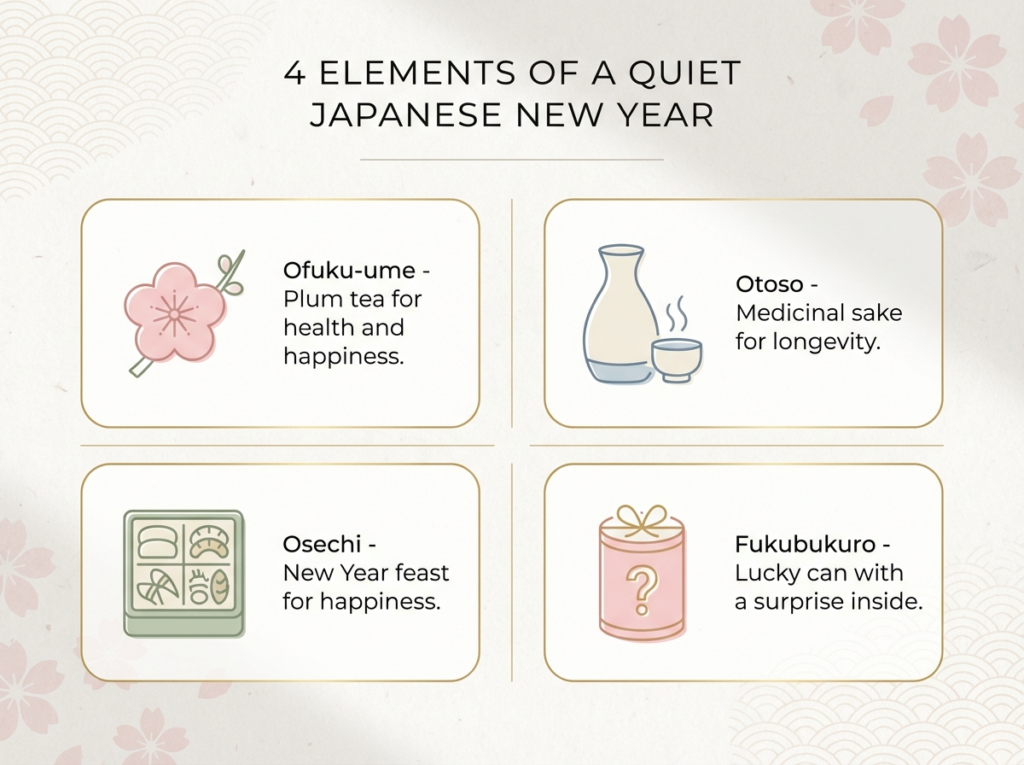
1. Ofuku-ume (おおふくうめ・大福梅 / Great Fortune Plum Tea)
A lucky charm from Kitano Tenmangu Shrine, believed to ward off illness and bring good fortune. “Ofuku” literally means “great happiness.”
2. Otoso (おとそ・お屠蘇 / Medicinal New Year Sake)
Sake infused with medicinal herbs, traditionally drunk by families on New Year’s morning to wish for a year free of illness. This year, I used the set I received from Kitano Tenmangu Shrine along with the Ofuku-ume.
3. Osechi & Ozoni (おせち・お雑煮 / New Year’s Feast)
The iconic New Year’s meal, where every dish carries symbolic meaning tied to prosperity, longevity, or fertility.
4. Fukubukuro (ふくかん・福缶 / Lucky Can)
In Japan, many stores sell fukubukuro (lucky bags) filled with mystery items during New Year. MUJI offers a unique version called fukubako (lucky can), sold through a lottery system. Inside, you’ll find a handcrafted item from somewhere in Japan, plus a prepaid card equal to the purchase price. It’s a gamble, a surprise, and a connection to Japanese craftsmanship all at once.
These traditions aren’t flashy or Instagram-famous. They’re quiet, intentional, and—once you understand their meaning—surprisingly moving.
Starting the Day with Ofuku-ume: A Ritual That Warms Body and Soul
The Power of a Small Plum Floating in Hot Water
On the morning of New Year’s Day, I boiled water in my tetsubin (iron kettle).
The tetsubin is a traditional Japanese tool said to make water taste smoother and more mellow.
Even the sound of water boiling in it brings a sense of calm.
I dropped one Ofuku-ume plum into the hot water.
This is a dried plum that symbolizes “great happiness.” I received it on December 25th when I visited Kitano Tenmangu Shrine for Shimai Tenjin, the final market day of the year.
I’ll be sharing that experience in a separate video soon.
Scene of pouring hot water from the iron kettle
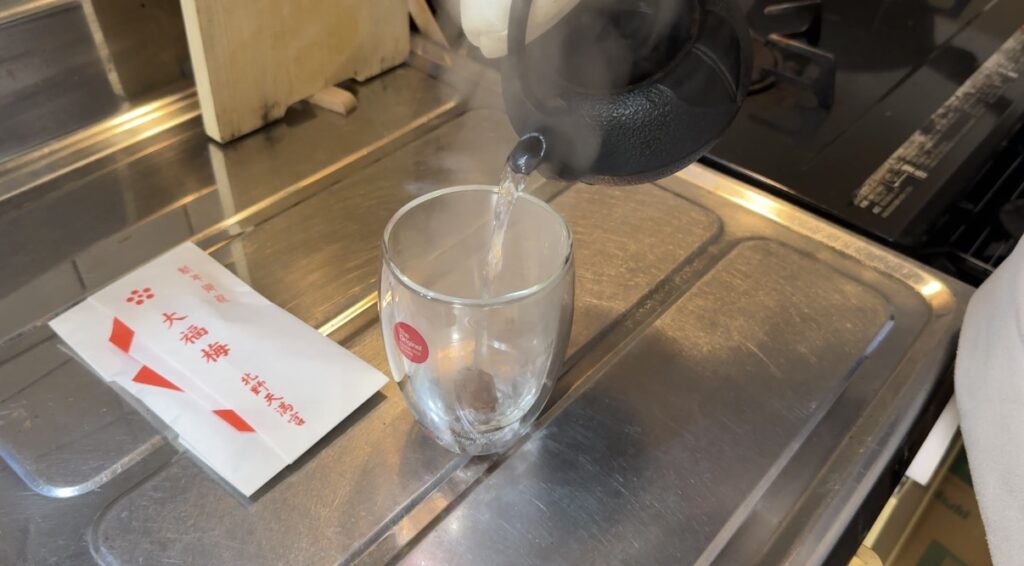
As I poured the water into my cup, the gentle fragrance of plum wafted up. It had a subtle saltiness and a mild tartness. With the first sip, I felt warmth spreading from the inside.
“Ahh, I’m warming up.”
The words just came out.
Close-up of tea with Ofuku-ume plum
Interestingly, this was my first time drinking Ofuku-ume on New Year’s Day, even though I’d received it every year. For some reason, I’d always let it sit unused.
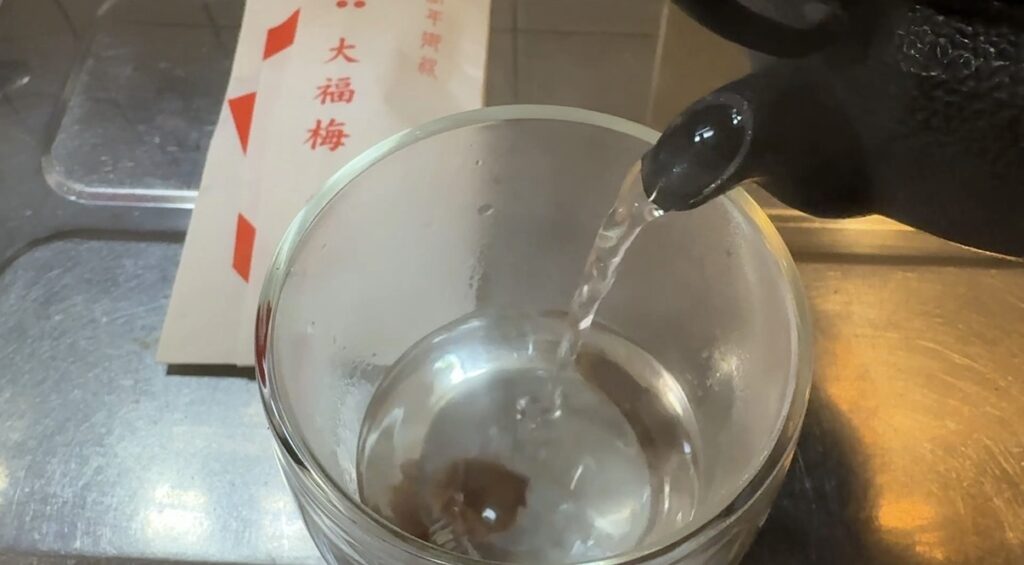
This year, I finally tried it and thought, “Why didn’t I do this sooner?” Practicing these small traditions made New Year feel so much more special.
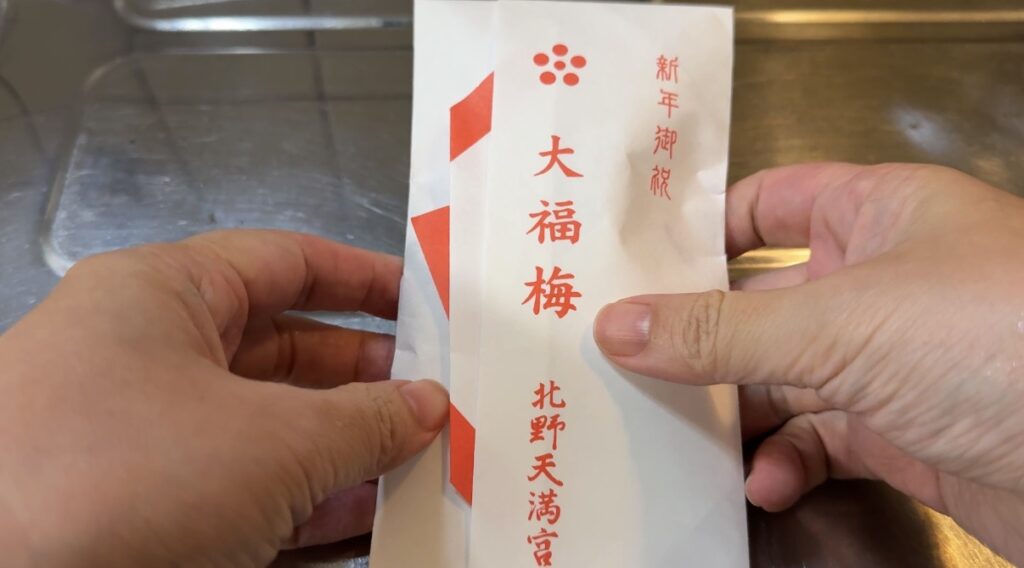
Cultural Background of Ofuku-ume
Kitano Tenmangu is a famous shrine in Kyoto dedicated to Sugawara no Michizane, the deity of learning.
The history of Ofuku-ume dates back to the Heian period .
Legend has it that Emperor Murakami, suffering from an epidemic, drank tea with this plum and recovered.
Since then, the custom of drinking Ofuku-ume on New Year’s Day to wish for good health throughout the year has continued.
Practical Information for Travelers
- Where to get it: Kitano Tenmangu Shrine (Kyoto)
- When: Available from mid-December (Shimai Tenjin is December 25th)
- Price: Approximately 700 yen (6 plums)
- Recommendation: Makes an excellent souvenir when visiting Kyoto
Otoso: Japan’s Medicinal New Year Sake
Herbal Aromas That Seep Into Your Body
After the Ofuku-ume, I prepared Otoso. This is a traditional drink made by infusing sake with medicinal herbs. Families drink it together on New Year’s morning to wish for good health and freedom from illness.
I used the Otoso set from Kitano Tenmangu. It comes with a small cloth pouch filled with herbs that you simply soak in sake.
However, if you leave it too long, the flavor becomes too strong.
Typically, 5 to 8 hours is ideal before removing the pouch.
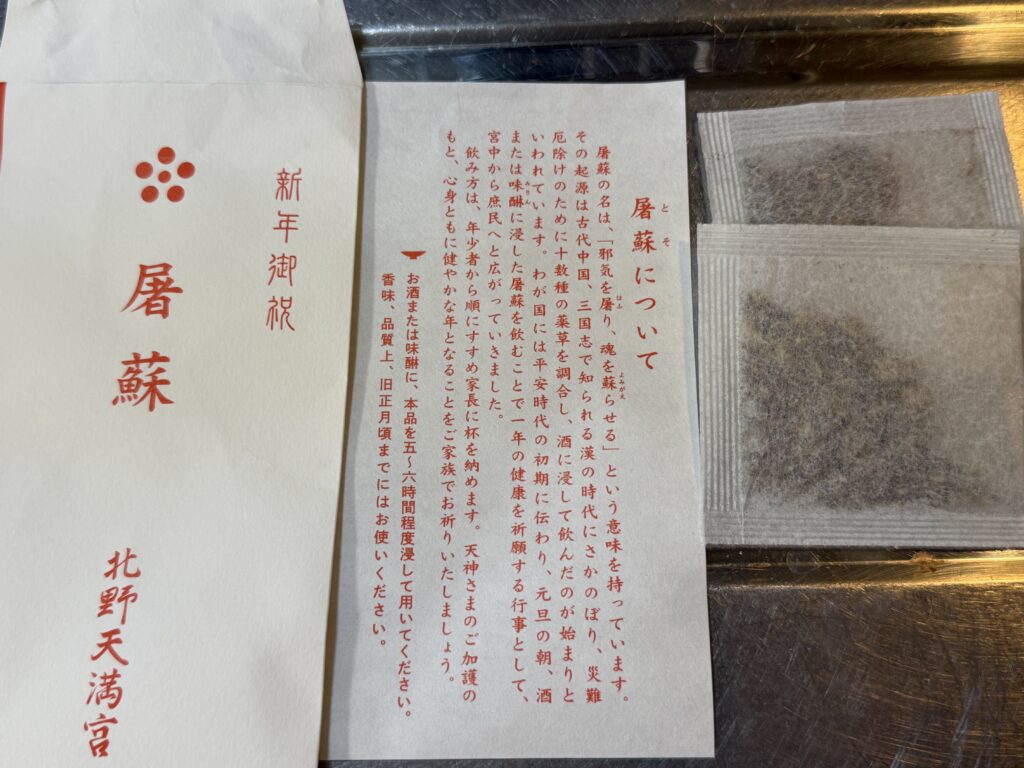
Herb pouch soaking in sake
Herb pouch soaking in sake
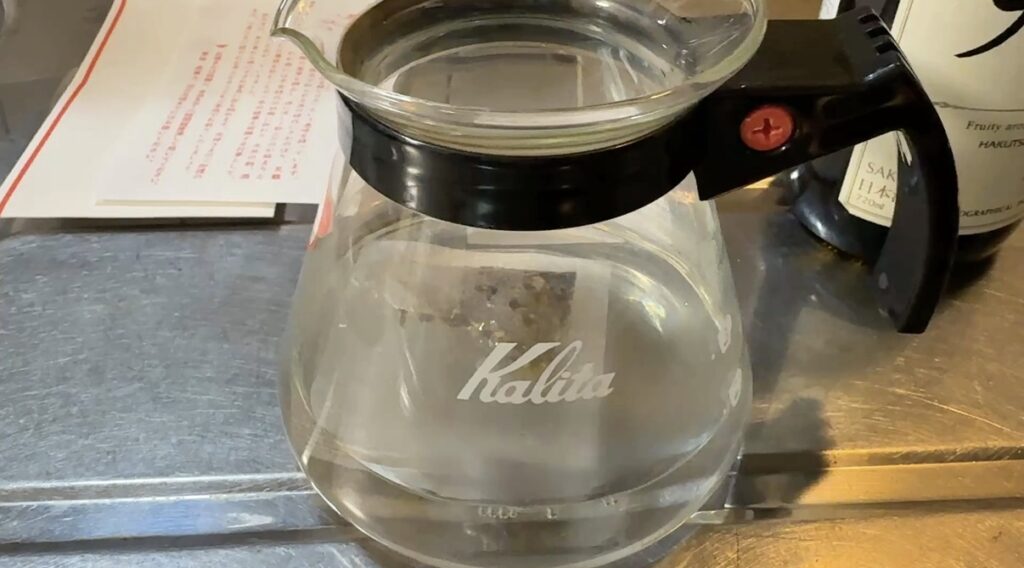
The finished Otoso has a distinctive herbal aroma, reminiscent of traditional Chinese medicine.
It’s slightly sweet, but you can also taste the subtle bitterness of the herbs.
When you drink it, you genuinely feel like “this is good for my body.”
Close-up of Otoso poured into a small cup
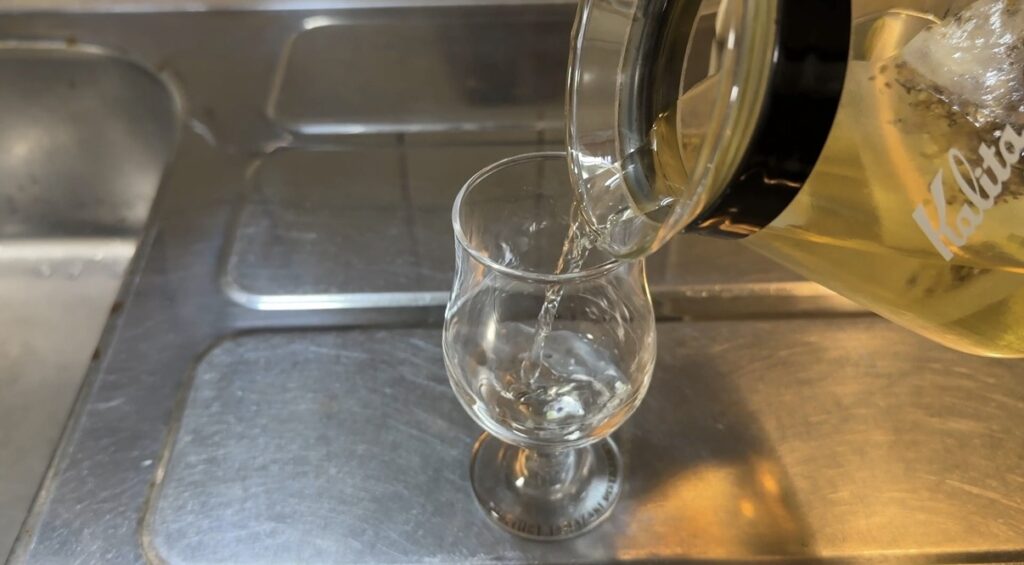
Honestly, I was skeptical at first. “Won’t herbs taste bad?” But when I actually tried it, the balance between the sake and the herbs was exquisite.
It naturally made me think, “I want to stay healthy this year.”
It’s not just about taste—it has value as a ritual that centers your mind.
Cultural Background of Otoso
Otoso originated in China and became established in Japan during the Heian period. By the Edo period (1603-1868), it had spread to common people and is now a New Year staple in many households.
Interestingly, there’s meaning even in the order family members drink it.
Drinking from youngest to oldest symbolizes “sharing youth with elders.”
Practical Information for Travelers
- Where to get it: Shrines, pharmacies, online shops
- Price: 500–1,000 yen
- Alternative: If you don’t drink alcohol, you can use amazake (sweet sake) instead
- Storage tip: Some people keep the used herb pouch as a good-luck charm
Osechi & Ozoni: A Meaningful Meal Prepared by My Father
Every Dish Carries a Wish
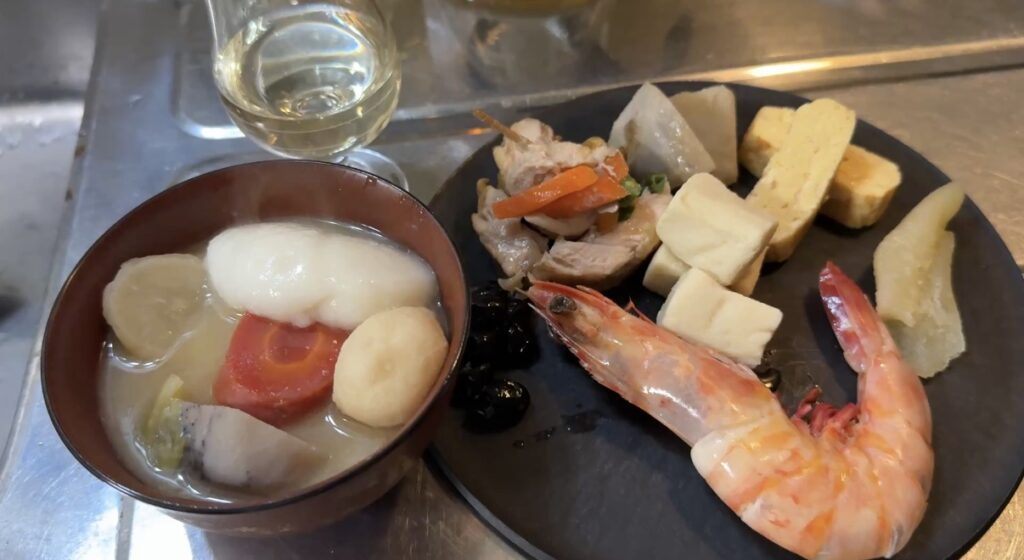
After centering myself with Ofuku-ume and Otoso, it was finally time for Osechi and Ozoni.
Osechi is an essential New Year’s dish in Japan, packed with lucky foods.
Each ingredient carries meaning and embodies wishes for the new year.
Ozoni is a soup with mochi (rice cakes), and its flavor and ingredients vary greatly by region.
My father prepares the Osechi and Ozoni every year.
Some items are store-bought, but others are homemade.
I felt a renewed sense of gratitude, thinking, “I’m so thankful he prepares this for me.”
A Wise Approach: Resting Your Stomach
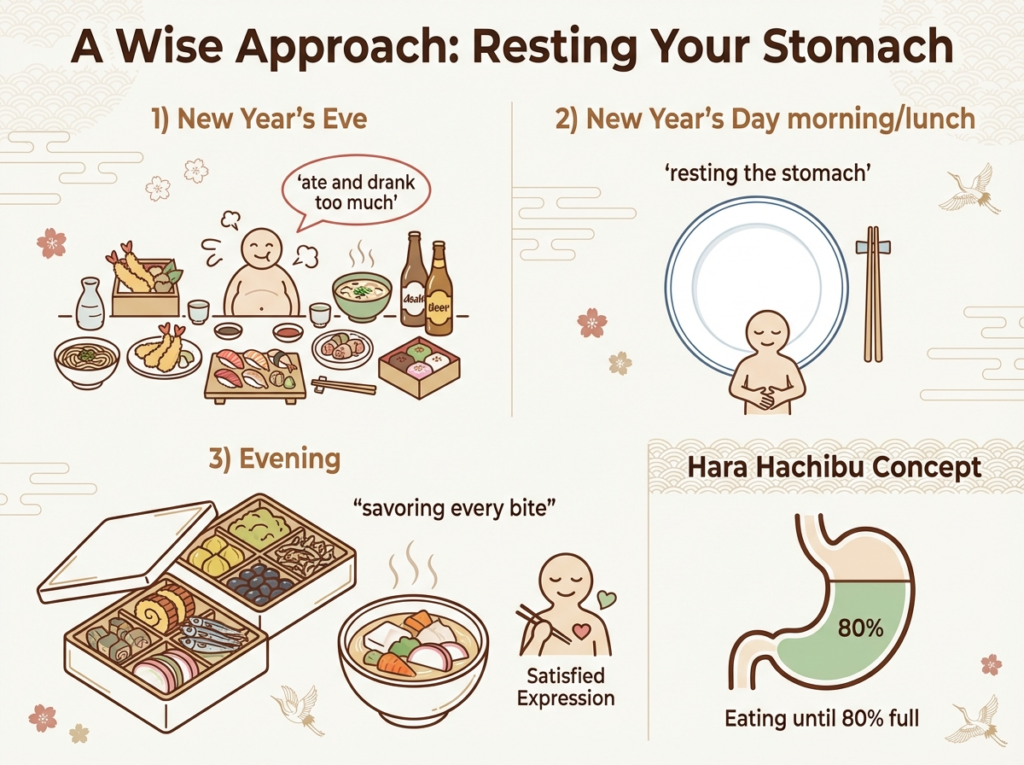
Truth be told, I ate and drank too much on New Year’s Eve.
So on New Year’s Day, I ate almost nothing for breakfast and lunch, resting my stomach. Then, in the evening, I finally ate the Osechi and Ozoni.
This decision was perfect.
Eating while hungry allowed me to truly savor every bite—it was “just right” and “delicious.”
This aligns with the Japanese philosophy of hara hachibu (eating until 80% full), a wisdom that values taking care of your body rather than overindulging.
The Meaning Behind Each Osechi Dish
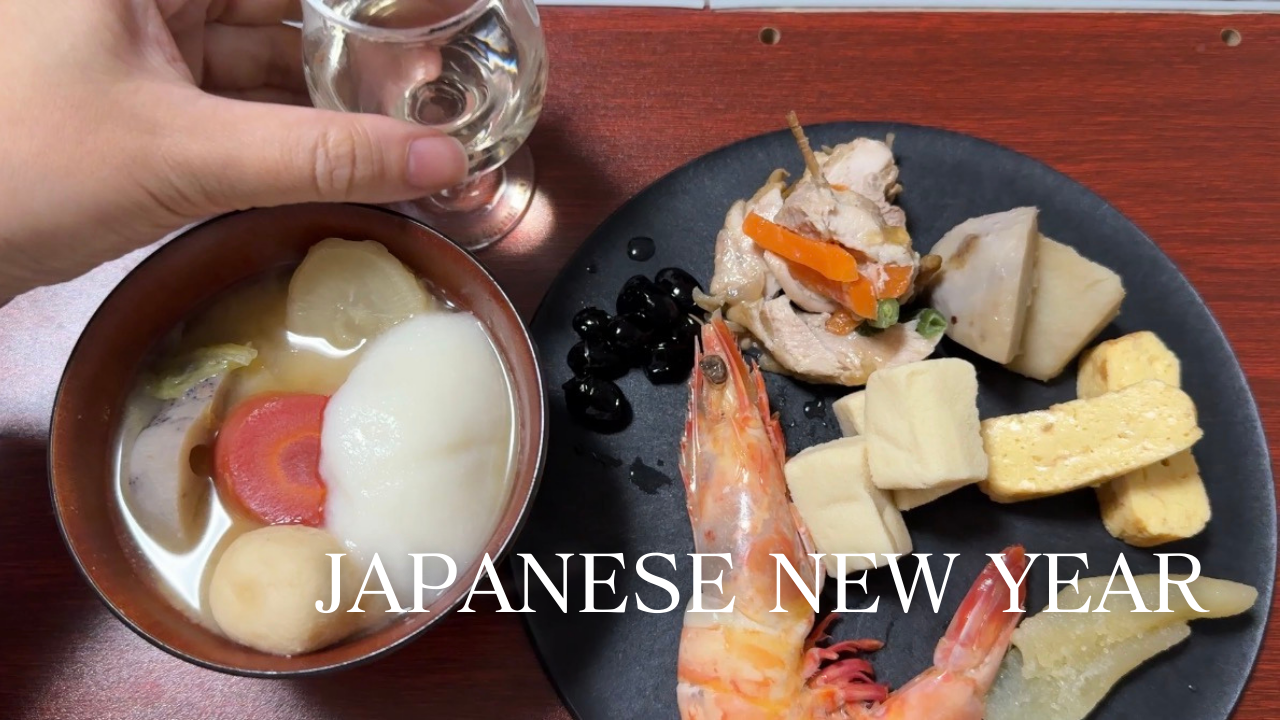
Looking at the plate, you’ll see a colorful array of dishes. It might not be obvious to those unfamiliar, but every single item has meaning.
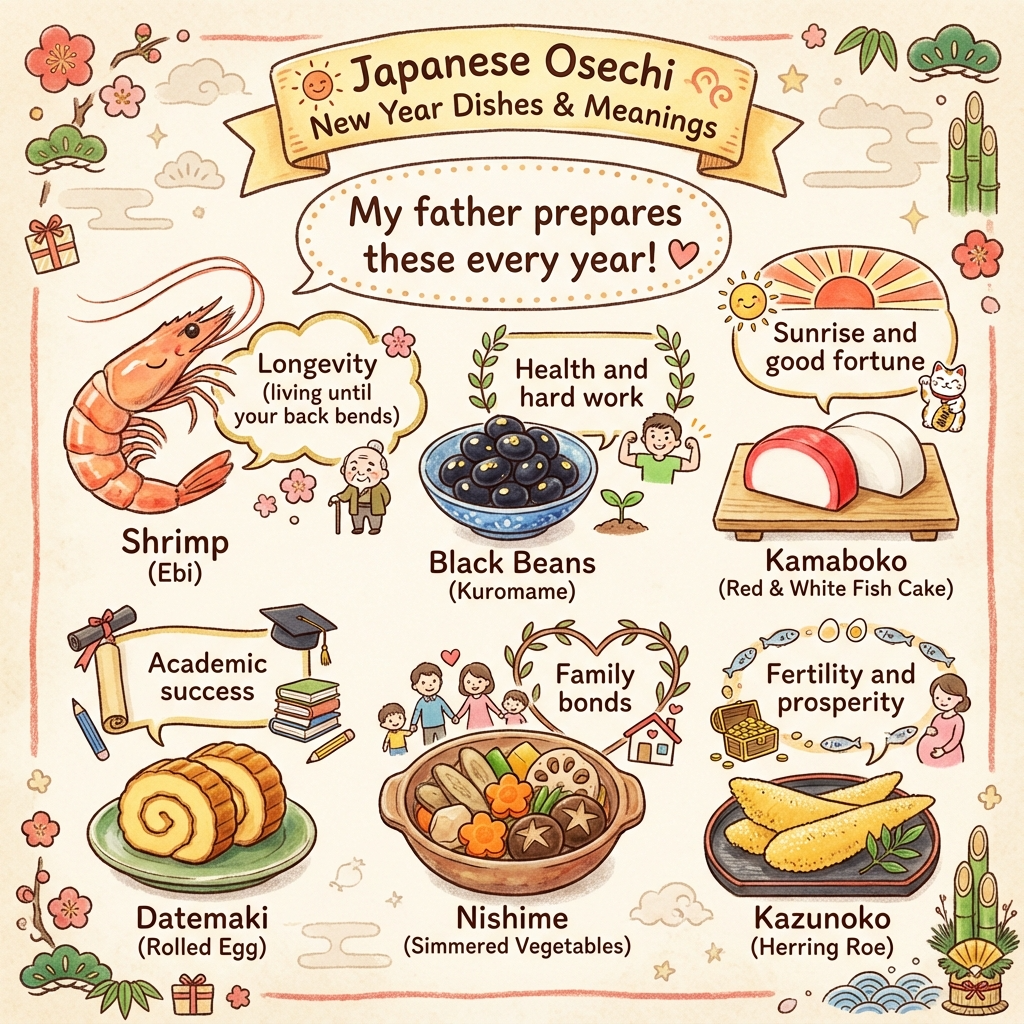
- 🦐 Ebi (Shrimp) → Symbol of longevity (curved back = living until old age)
- ⚫ Kuromame (Black Beans) → Health and diligence (“mame” means both “bean” and “diligent”)
- 🌀 Kamaboko (Fish Cake, Red & White) → Sunrise, auspicious colors
- 🥚 Datemaki (Sweet Rolled Omelette) → Scroll = advancement in learning and culture
- 🍠 Nishime (Simmered Vegetables) → Family unity and bonds
- 🐟 Kazunoko (Herring Roe) → Fertility (many eggs = many descendants)
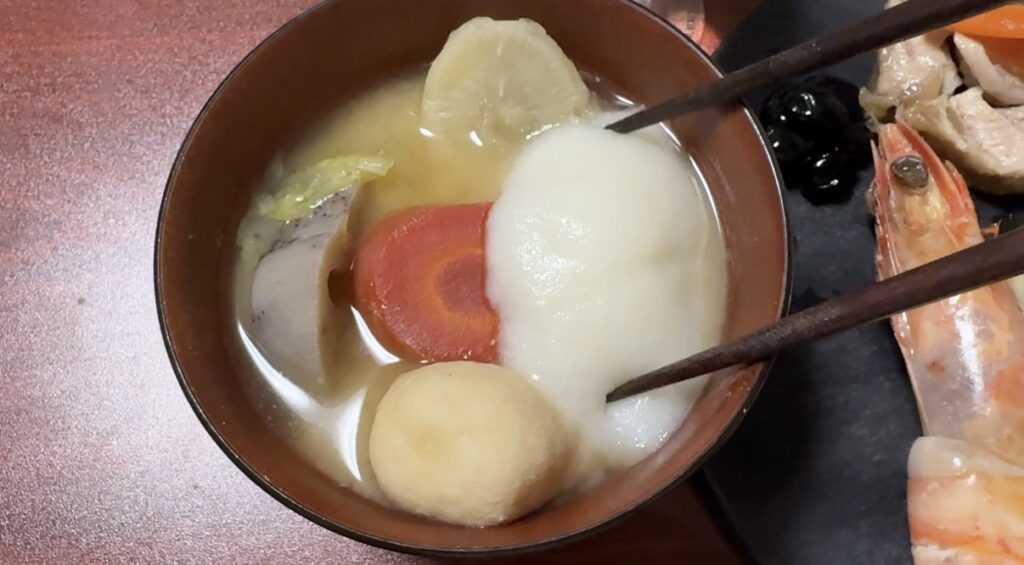
Kyoto-Style White Miso Ozoni
Ozoni varies dramatically by region. What I ate was Kyoto-style, with a white miso base. It’s mild and slightly sweet.
In Tokyo, a soy-sauce-based clear broth is more common, but in Kyoto, white miso is the norm. This difference beautifully reflects the diversity of Japanese culture.
Inside were one round mochi, carrot, daikon radish, taro, lotus root, and napa cabbage. The round mochi symbolizes “harmony,” and its lack of sharp edges represents “a year without conflict.”
Close-up of Ozoni (if another angle is available)
Why I Didn’t Feel Lonely Eating Alone
Many people might have the preconception that “New Year should be spent with family.”
But since I started living alone, I’ve been freed from that idea.
Even alone, I can eat traditional food, watch my favorite TV shows, and relax at my own pace.
I turned on the TV and enjoyed a New Year variety show while eating.
That’s what felt “just right” for my New Year.
What matters is being grateful that I could welcome the new year peacefully through tradition.
That, I believe, is the essence of Japanese New Year.
Practical Information for Travelers
- Where to get Osechi: Department stores, supermarkets, online orders (usually reserved in December)
- Price: 3,000–10,000 yen (depending on size and content)
- Single servings: Small packs are available, so you can enjoy it solo
- Regional differences in Ozoni: Kyoto (white miso), Tokyo (soy sauce base), Hiroshima (with oysters), etc.
Opening MUJI’s Fukubukuro: A Moment of Excitement
A Can Full of Mystery—What’s Inside?
After my meal, it was finally time for what I’d been looking forward to: opening MUJI’s Fukubukuro (lucky can). This is a New Year-exclusive product sold through a lottery, and the excitement comes from not knowing what’s inside until you open it.
Unopened Fukubukuro can
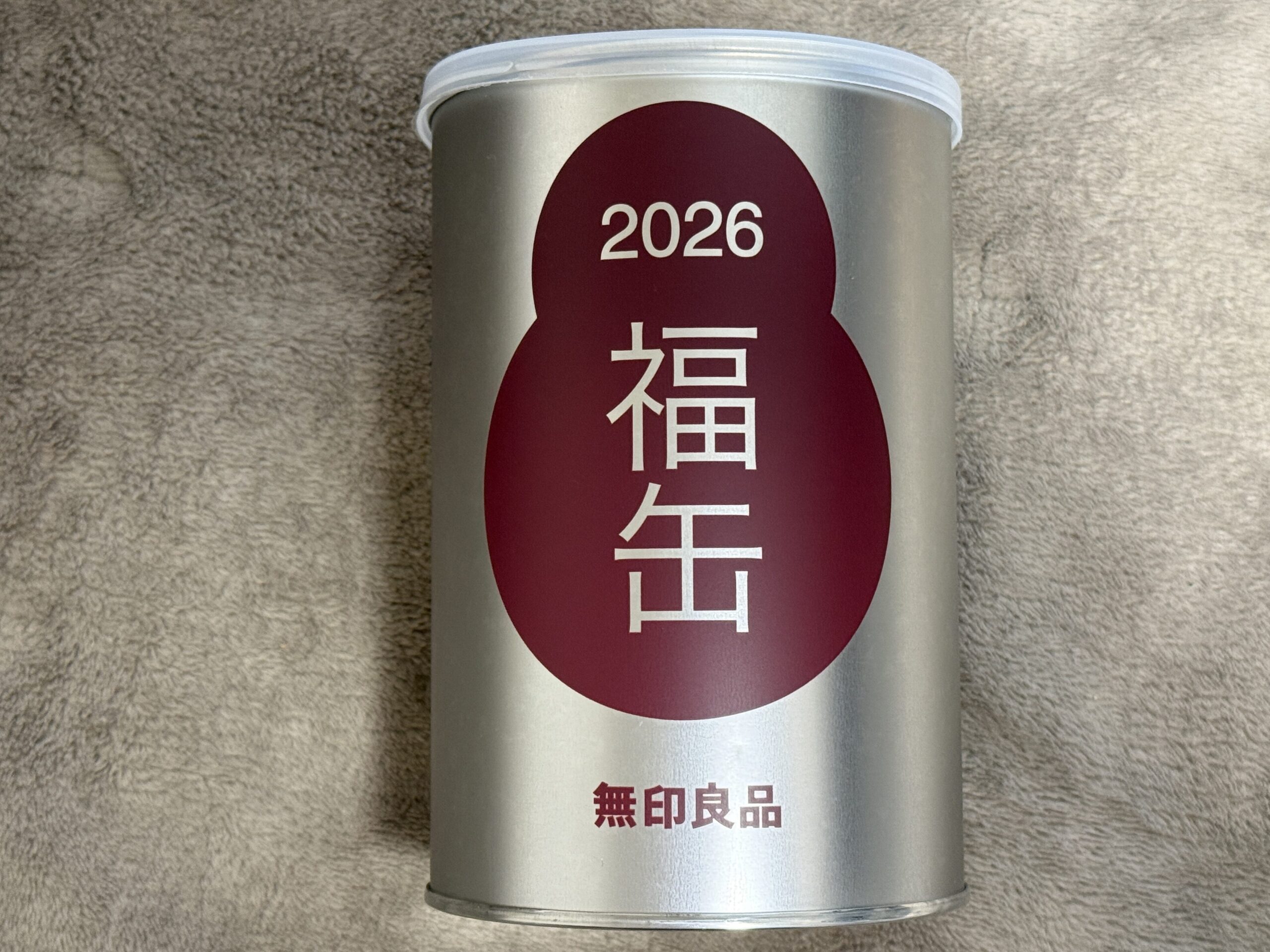
What Is a Fukubukuro?
MUJI’s Fukubukuro is a canned version of Japan’s unique fukubukuro (lucky bag) culture.
Fukubukuro are mystery bags sold during New Year—you buy them without knowing what’s inside. It’s a fun gamble.
While typical fukubukuro contain clothing or miscellaneous goods, MUJI’s version is a bit different.
Features of MUJI’s Fukubukuro:
- Price: 2,026 yen (changes each year to match the year number)
- Contents: A handcrafted item from somewhere in Japan + a 2,026-yen MUJI prepaid card
- Essentially free—you get to experience Japanese craftsmanship at no real cost
- Lottery system: You need to apply online (typically in November–December) and can only purchase if you win
I applied for the lottery and felt pure joy when I won. “Yes! I got it!” Just winning itself already felt lucky.
The moment of opening (ideally with hands visible)
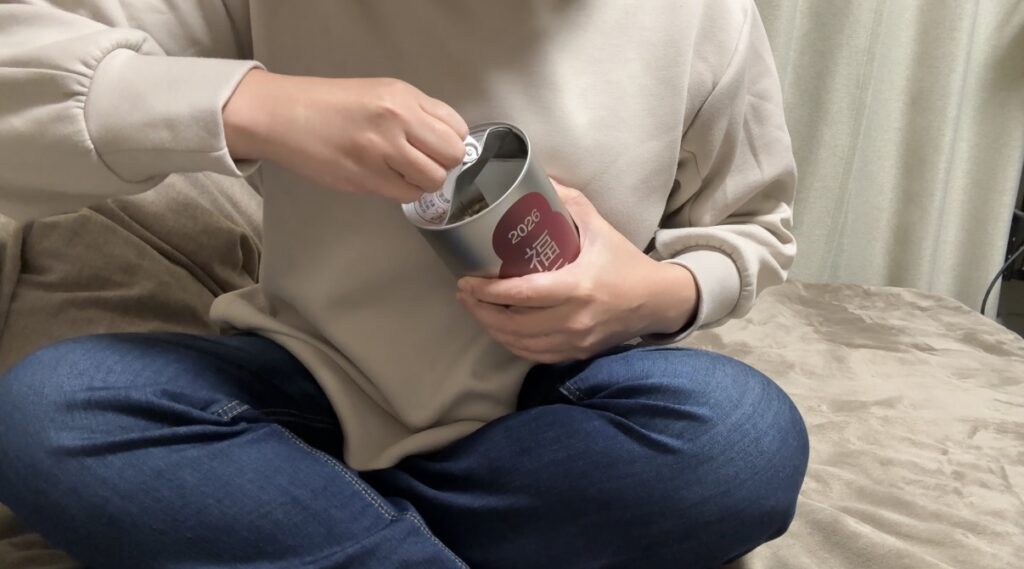
This Year’s Contents: “Meoto no Uma” (Married Couple Horses) from Saitama
When I opened the can, out came a wooden figurine called “Meoto no Uma” (Married Couple Horses), handmade in Saitama Prefecture.
Close-up of the “Meoto no Uma” figurine
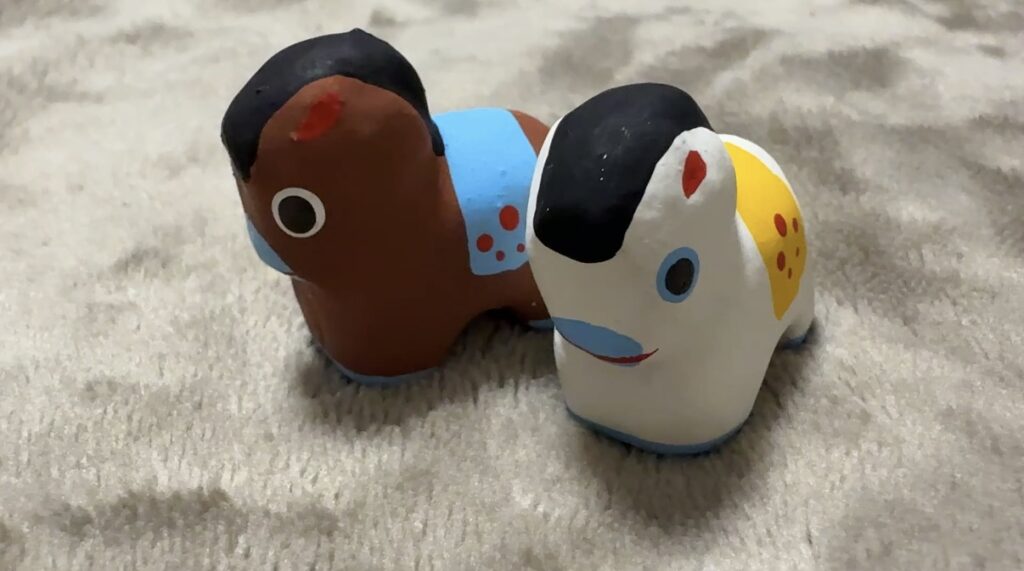
It’s small, round, and light. The natural wood texture and warm color palette are lovely.
The moment I saw it, I thought, “It’s so cute!”
“Meoto no Uma” is a good-luck charm symbolizing marital harmony and household peace.
Horses have long been symbols of “strength” and “progress” in Japan.
The image of two horses side by side represents partnership and bonds.
I’ve placed this figurine on my bookshelf.
Every time I see it, I feel a sense of positivity, thinking, “I want to have a fun and healthy year.”
The True Appeal of Fukubukuro: Encounters and Connections
The appeal of Fukubukuro isn’t just “not knowing what’s inside.”
It’s about encountering handcrafted items from across Japan—items you would never have chosen yourself.
That’s the real magic.
Living in Kyoto, I would never have had the chance to encounter horse figurines from Saitama.
But now that I have one, I’ve grown attached to it. This is what we call go-en—a fated connection.
MUJI’s Fukubukuro is different from commercial lucky bags. It carries social significance: preserving traditional crafts.
It helps pass down artisan skills to the next generation and brings regional crafts to people across the country.
All of that meaning is packed into a 2,026-yen can.
Conclusion: The Value of a Quiet, Meaningful New Year
What I Felt Through This Experience
This New Year’s Day made me realize something important.
Japanese New Year isn’t just about flashy tourist destinations—it’s about quiet, deeply meaningful traditions rooted in every home.
The warmth of Ofuku-ume, the herbal aroma of Otoso, the wishes embedded in each Osechi dish, and the surprise of the Fukubukuro.
All of these small rituals make the beginning of the year feel truly special.
Even alone, I was able to welcome the new year surrounded by tradition.
That was the “just right” New Year for me.
A Message to Readers
If you ever have the chance to experience Japanese New Year, I encourage you to go beyond the bustling hatsumode and explore these quiet traditions.
There’s a culture not found in guidebooks, yet deeply rooted in the hearts of Japanese people.
What matters is finding the “just right” New Year for you.
It might be in the midst of a crowd, or it might be in the quiet of your own home.
Both are correct.
Japanese culture reveals its depth only when you experience it firsthand.
I hope this article helps deepen your understanding of Japan.
Watch the Full Experience on YouTube
I recorded the entire experience in a video. Preparing Ofuku-ume, making Otoso, and the exciting moment of opening the Fukubukuro—you’ll feel the real atmosphere of a Japanese New Year that words alone can’t convey.
Subscribe for More Insights Into Real Japan
If you enjoyed this post, please subscribe to my YouTube channel.
I share more than just tourist spots—I explore everyday life in Kyoto, deep dives into Japanese culture, and personal experiences.
Let’s explore the Japan that guidebooks don’t show, together.
コメント